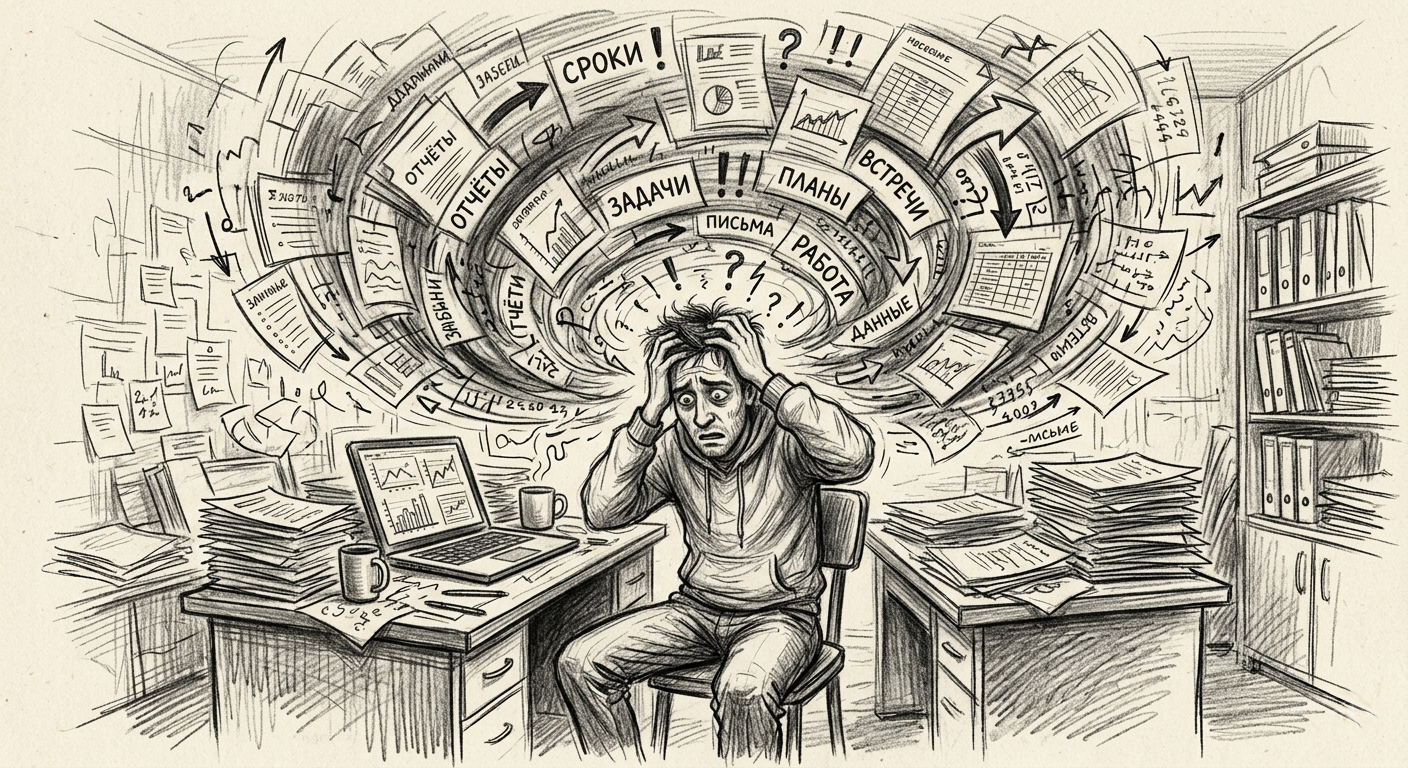
When I moved from Belarus to Germany, my entire German vocabulary consisted of one phrase: "Mit Karte" — at the supermarket checkout. And honestly, for a long time, that was enough.
Work was in English. My colleagues were an international team. Entire workdays passed without a single word of German. Then home. Life went on, and German just never came up.
Then the kids arrived
Everything changed when the kids started Kindergarten. They began speaking German — first a few words, then full sentences. Children pick up languages at a terrifying pace. Meanwhile, I was still standing at the checkout with my "Mit Karte".
But Kindergarten isn't just watching your kids blossom linguistically. It's also messages from teachers, parent meetings, notices on the board — all in German. That's when it became clear: living without the language in Germany is like navigating a minefield.
Bureaucracy never sleeps
Germany is a country of letters. Real, paper ones. Your mailbox regularly fills up with eagle-stamped envelopes, official notices, bills, demands to confirm something or appear somewhere. Every one of those letters is a quest.
Without the language, you need to:
- Find an apartment — which means emailing landlords, viewing flats, handling paperwork. Germans take tenants seriously, and your first impression is largely formed by how you write.
- Enroll your kids in Kindergarten — waitlists, application forms, communicating with teachers. And then you realise you also need to understand the other kids — your children's friends. German kids talk fast, mumble, and have zero interest in whether you follow along.
- Deal with the neighbours — seems trivial. But when a neighbour leaves a note on your door or strikes up a conversation in the lift and you just stand there smiling like a mannequin — it's awkward. And it keeps happening.
- Figure out health insurance — Krankenversicherung is its own world. Gesetzliche or private? What's covered, what isn't? Why was this claim rejected? All the correspondence with your insurer is packed with terms that don't translate cleanly through Google.
- File your tax return — already a sport for native speakers. If you're also a freelancer, add Gewerbeanmeldung, Umsatzsteuer, advance payments, and ongoing correspondence with the Finanzamt. Delightful.
No time to learn, but no choice either
At some point you realise: this just isn't working. Language courses sound great in theory, but there's no time. Work, kids, life. The classic story.
Podcasts helped me a lot. First the slow, learner-friendly ones. Then regular German podcasts on topics I actually cared about. You can listen anywhere — in the car, on a run, waiting at the tax office. Gradually the language starts to settle in your head, and you find you understand quite a lot.
But understanding speech and writing correctly are two very different things.
Mistakes still creep in
Even once you have a decent level, something in every letter is off. Not spelling — any spell checker handles that. The problem runs deeper: that's not how Germans say it. The grammar is technically fine, the words are right, but a native speaker would phrase it differently. Different word order, different turn of phrase, different register.
I started using ChatGPT to check my letters. It works, but every time you have to write a prompt: explain the context, ask it to focus on the German, specify what to fix. It gets old. You just want to paste the text and get back a corrected version with an explanation.
Why I built GrammarMama
I built this site for myself. Just to make it easy: paste your German text, get corrections and explanations of what was wrong and why. No extra steps.
Turns out I'm not the only one who needed something like this. If you're an expat, a freelancer, or just learning German — give it a try. I hope it saves you some time and frustration.
Mit Karte is always an option, of course. But knowing the language is better.