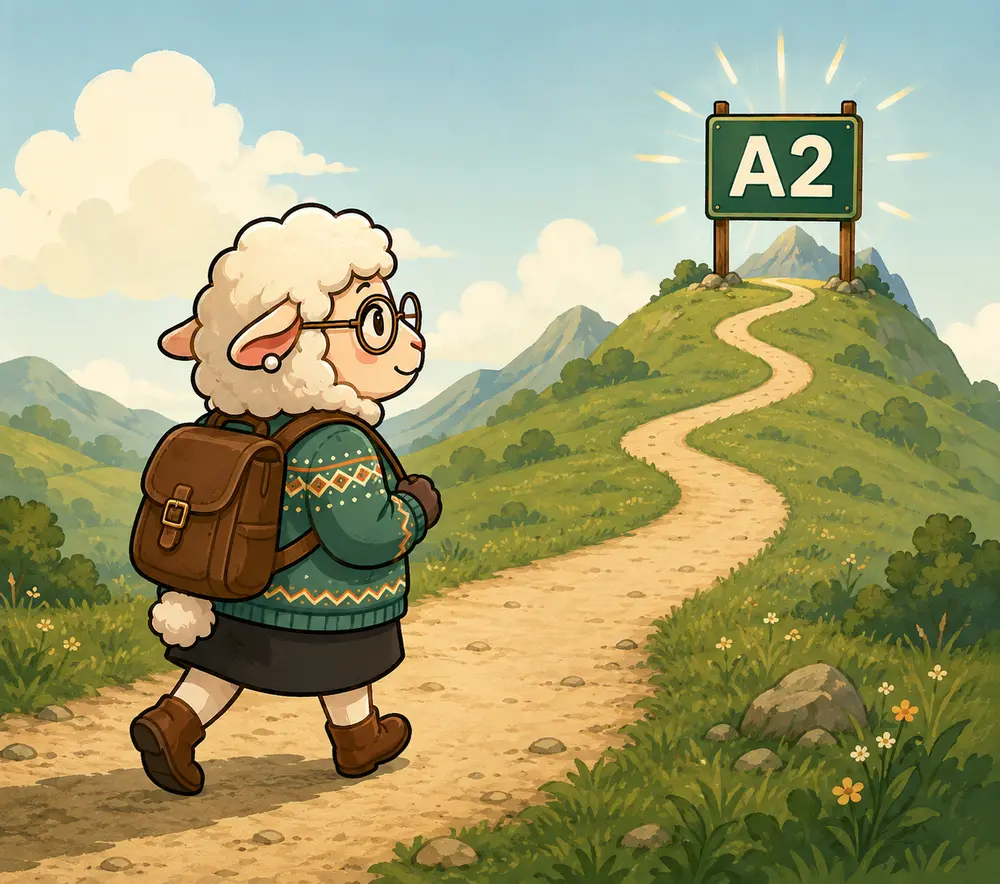
You want to get better at English grammar.
So you look something up…
fix one mistake…
and then wonder: what should I even learn next?
That random, jump-around feeling is exactly what we wanted to fix.
📚 Meet the Grammar Curriculum
We've started building a grammar curriculum — a clear path through English grammar, organised the way you actually learn:
Language → level → topic → lesson.
Pick the language you're learning, choose your level, and you get a tidy list of grammar topics. Each topic has its own focused lesson with explanations, real examples, and common mistakes to avoid.
👉 You can explore it here: GrammarMama Learning Paths
🎯 Why a Curriculum Matters
Grammar isn't a pile of random rules. It has an order — and learning it in order makes everything easier.
A curriculum gives you three things a search box never will:
- Structure — you see the whole map, not just one rule at a time.
- The right level — topics are grouped by CEFR level (A1, A2, B1, B2), so nothing feels too easy or too overwhelming.
- A goal you can feel — each topic is tied to something real you'll be able to do, like "talk about finished actions in the past."
👉 Instead of "what now?", you always have a clear next step.
🆓 Free and Open
Every lesson in the curriculum is free to read — no account, no login, no paywall.
Bookmark it, share it, come back whenever you're stuck.
👉 It's there to help you whether or not you ever sign up.
🕰️ Start Here: the Past Simple (A2)
The first complete set of lessons covers one of the most useful tenses in English — the Past simple. It's how you talk about yesterday, last week, your childhood, your last trip.
We broke it into four friendly lessons so you can take them one at a time:
- Was / were — the past of be, the one verb that behaves differently from all the others.
- Regular verbs — the easy majority: just add -ed (with a few spelling and pronunciation tips).
- Irregular verbs — go → went, see → saw, and the patterns that make them easier to remember.
- Questions & negatives — how did and didn't take over, and why the main verb goes back to its base form.
👉 Together they take you from "I work" to "Did you work yesterday? — No, I didn't."
🧭 How to Use It
It's simple:
- Find your level. Not sure? A2 is a good place to look if you can already make basic present-tense sentences.
- Work through the topics in order, or jump to the one that's been tripping you up.
- Then practise. Reading a rule is step one — using it is what makes it stick.
⭐ Take a Look
This is just the beginning — more topics and levels are on the way, added one lesson at a time.
👉 Start exploring the learning paths, open the Past simple lessons, and take the next confident step in your English.