上一次我们进入了时态领域——过去时态与礼貌请求:past continuous、搭配ever/never和for/since的present perfect,以及表示礼貌请求的can/could/may。
这一次,四节新课的主题是构建更精准、更流畅的英语:名词前选对词、描述路径、用一个小从句说明某人或某事是什么,以及知道什么时候"太多"、什么时候"刚够"。
🆕 A2四节新课
我们在A2级别新增了四节课:
- 正确的冠词 — I saw a cat. The cat was black.
- 你要去哪里 — She walked into the room. We drove through the tunnel.
- 具体是哪个 — the teacher who helped me、the film that we watched
- 太多vs.够了 — It's too cold. It's warm enough to go out.
👉 在**英语A2学习路径**中找到全部四节课。
📌 名词前的正确词:冠词
用a还是an?用the?还是什么都不加?英语有三种冠词选择——不定冠词(a / an)、定冠词(the)和零冠词(不加冠词)。各有明确的用途。
A / an 用于第一次引入单数可数名词,或表示"这类中的任意一个":She's a teacher. I need a pen. a 和 an 的选择取决于下一个词的发音(而非拼写)——辅音音素前用 a,元音音素前用 an:a dog、an apple、a university(/juː/ 以 y 音开头)、an hour(h 不发音)。
The 用于说话者和听话者都清楚具体指的是哪个时:第二次提及、唯一的事物(the sun)、或上下文已说明(Can you close the window?——这个房间的窗户)。零冠词用于泛指的复数名词或不可数名词(Dogs are loyal. Water is essential.)以及大多数专有名词(I live in Paris)。
中文没有冠词,因此英语冠词是许多中文母语者的难点。关键是记住三条规则:第一次提及→a/an,已知具体所指→the,泛指或专有名词→不加。
👉 Articles: a / an, the, zero article 涵盖三种选择的清晰规则、a vs. an 的发音规则、固定短语的零冠词(at work, by bus, go to school)以及最常见的错误——❌ I am teacher → ✅ I am a teacher,❌ He lives in the France → ✅ He lives in France。
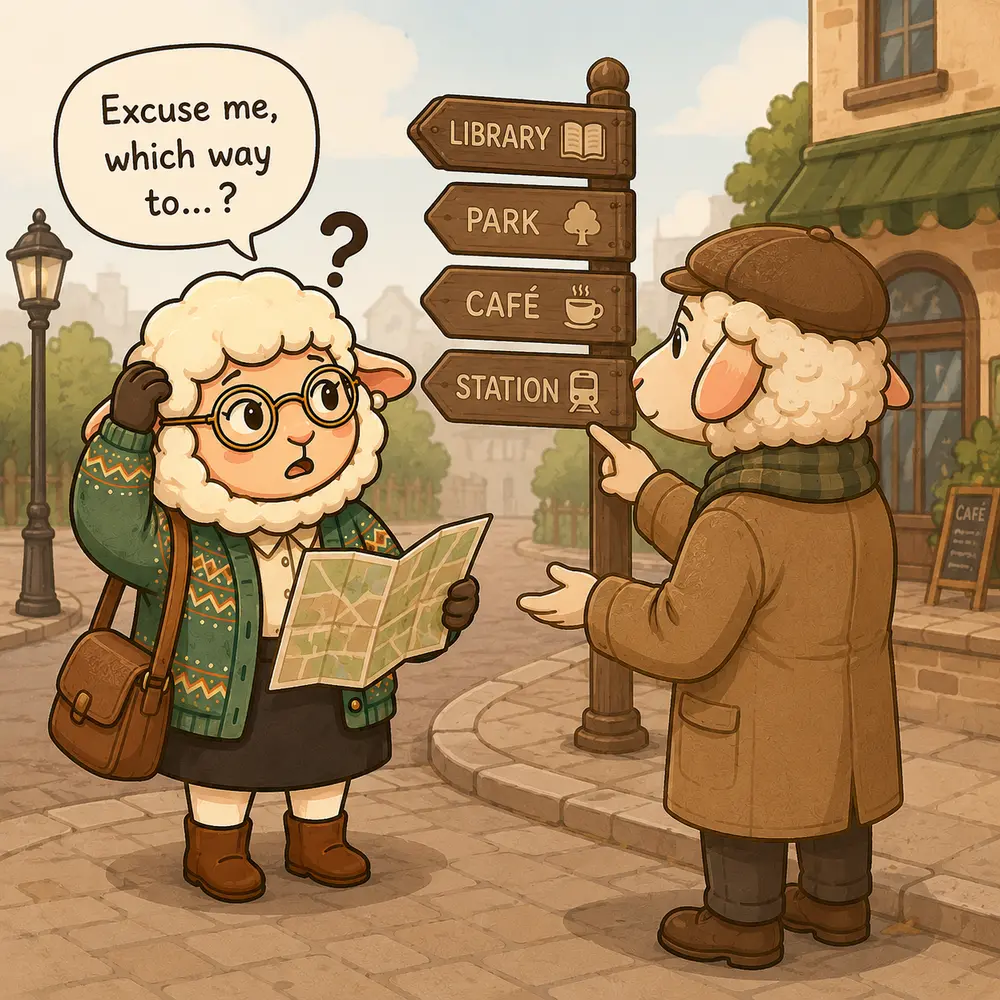
🚶 你要去哪里:移动介词
描述路径时——某人从哪里出发、朝哪里移动、怎样越过障碍——英语使用移动介词。大多数介词能清晰呈现路线的视觉画面。
From 表示起点,to 表示目的地(We travelled from London to Paris.)。Towards 表示朝某方向移动,但不一定到达。Into / out of 表示穿越边界——进入或离开封闭空间(She walked into the room. He ran out of the building.)。Onto / off 对表面做同样的事(The cat jumped onto the table. She fell off the bike.)。
Across 表示从一侧穿越到另一侧(We swam across the river.);through 表示穿过封闭或密集的空间内部(We drove through the tunnel.)。Along 沿着某物的长度前进,past 经过某个固定点,over / under 表示从某物上方或下方通过的移动。
👉 Prepositions of movement 按含义分组,讲解最有用的对比——across vs. through、to vs. towards、into vs. in——以及需要避免的错误:❌ We drove through the bridge → ✅ We drove across the bridge。
🔗 谁和什么:基础定语从句
用定语从句,可以把对某个名词的补充信息融入一个流畅的句子,而不是说两个短句:
The woman lives next door. She teaches music. → The woman who lives next door teaches music.
关系代词很简单:人用 who,事物用 which,两者都可用 that。从句紧跟在它所修饰的名词后面。当关系代词是从句的主语(没有其他词执行动作)时,不能省略——the colleague who helped me。当它是宾语(后面已有另一个主语)时,可以完全省略——the film I recommended = the film that I recommended。
👉 Basic relative clauses (who, which, that) 讲解主语从句与宾语从句的区别、何时可省略关系代词、表示地点的 where(the café where we met),以及最常见的错误——❌ She is the doctor which treated me → ✅ ...the doctor who treated me,❌ The man who he lives next door → ✅ The man who lives next door。
⚖️ 太多vs.够了:Too / Enough
Too 和 enough 都涉及程度或数量,但方向相反。Too 表示"超出了好或可能的限度"——总是有问题:The coffee is too hot(我喝不了)。 Enough 表示足够:The coffee is cool enough to drink.
词序至关重要:too 放在形容词和副词前面(too cold, too fast);enough 放在形容词和副词后面,但放在名词前面(warm enough, enough time)。两者都自然引出 to + 动词原形短语:too hot to drink,warm enough to swim in.
修饰名词时:too much(不可数)或 too many(可数):too much traffic, too many people。另外,very 和 too 不一样——very 是中性强调,too 表示有问题。
👉 Too / enough 涵盖 too、too much、too many、名词前的 enough、形容词/副词后的 enough,以及 too/enough + to-不定式 结构——并讲解常见错误:❌ She is enough old to drive → ✅ She is old enough to drive,❌ The bag is very heavy to carry → ✅ The bag is too heavy to carry。
🆓 依然免费,依然开放
和课程中所有其他内容一样,四节课均可免费阅读——无需账号、无需登录、无需订阅。每节课末尾都有一个小测验,可以马上检验自己。
收藏它们,分享它们,在冠词选择或 too / enough 的句子让你困惑时随时回来。
⭐ 去看看吧
课程在持续增长,每次一节。
👉 打开**英语A2学习路径**,选择今天需要的课,迈出学英语自信的下一步。